Caulk cracks and crevices to eliminate hiding places
Get rid of the clutter to eliminate hiding places
Drying items on high heat for 15 minutes will kill all stages of bed bugs and their eggs
Be careful if you vacuum up bed bugs or their eggs, because they’ll infest your vacuum cleaner if you don’t clean it completely
You can force bed bugs out of cracks by running an index card along it
Bed bugs are attracted to pheromones left behind by other bugs, so clean with hot soapy water
If you discover that you have bed bugs don’t panic.
While bed bugs can be very difficult to control, you can succeed if you are thorough when preparing and treating .
Tools: flashlight, magnifying glass, blow dryer, caulk & a caulking gun, vacuum, paint scrapper or an index card, trash bags, and packing tape.
Start by getting rid of any clutter, as this will eliminate the places they can hide. Next, seal all items in plastic bags before moving them from the infested room. This will prevent you from spreading the bed bugs to other rooms and making your problem worse.
Bed bugs can be messy, so wipe off any signs, bloodstains, droppings, or shed skin, with hot soapy water. If you’re thinking of using your vacuum to pick up any bed bugs, eggs or skin, be aware that you will need to clean it thoroughly when you’re finished to prevent them from infesting it.
To check in cracks and crevices, you can get an index card and run it along the opening to force out any bugs or eggs. You can also force bed bugs out, if they’re present, with the low setting of a blow dryer.
Finally, you’ll want to repair any cracks in plaster, remove loose wallpaper, and caulk all cracks and crevices.
Click on the images to the right to learn more.
Anything that is discarded should be placed in a sealed garbage bag located within that room. Bags should be discarded outside of the home.
Do not spread the bed bugs within your home or to the homes of others by disposing of infested items not sealed in bags. Infested mattresses or box springs that are going to be discarded should be completely wrapped in plastic prior to removal from the room and should be marked "do not reuse."
Small cracks where wires and pipes come in are bed bug highways. Seal them up with caulk. While you're at it, seal up the cracks behind your baseboards and molding after you've vacuumed them.
If you vacuum up bugs and eggs you can run the risk of infesting your vacuum cleaner and spreading the infestation. Be sure all the contents of the vacuum are sealed in a bag before you dispose of it. Also make sure the hose, bristles, and attachments are cleaned and free of bugs and eggs before storing or reusing your vacuum. Don't forget to treat the wheels of the vacuum.
Do not vacate your home in order to starve the bed bugs to death. Bed bugs can live for six months or more without a meal. And do not use a bug bomb or fogger since these products only kill a few bugs and disperse the others throughout your home.
Pull the bed away from the wall, and make sure that your bedspread and blankets don't touch the floor. Seal your mattress and box springs in bed bug proof encasements; this will kill any bed bugs that are trapped inside.
Do not switch your sleeping arrangements to another bed or sofa since the bed bugs will spread even more as they will follow you to your new sleeping location.
If you have detected early signs of bed bugs, it's possible to exterminate them on your own. It isn't easy though. Depending upon the size and extent of your bed bug infestation, it can take 6 weeks or more. Be patient and diligent.
The first thing you are going to want to do is gather up all suspected infested items such as bedding, clothing, towels and the like. Place them all into the dryer for a 15 minutes. It only takes five minutes at 113º F to kill all stages of bed bugs and their eggs.
Any items that cannot go in the dryer should be bagged and sealed shut with packing tape.
Any clothing taken to the dry cleaner needs to be sealed in a bag and you need to let them know that the bags might contain bed bugs. Don't be embarrassed. You need to tell them, so they don't spread the bed bugs to others.
You can vacuum your bed, furniture, cracks and crevices to pick up any bed bugs and eggs, but be aware that you will need to clean your vacuum (hoses, brushes and bags) thoroughly, so they don't infest your vacuum.
Scrub down any surfaces that have signs of bed bugs such as stains or shed skin with hot soapy water.
Caulk any cracks and crevices to eliminate their hiding places.
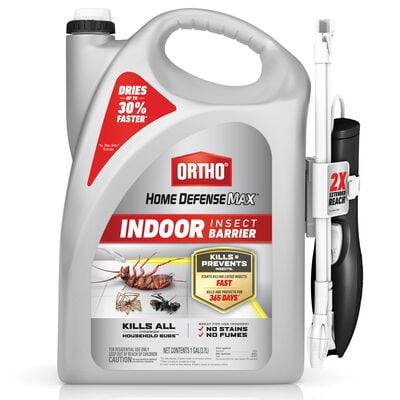
Next, apply Ortho® Home Defense Max® BEDBUG Killer as a spot treatment to cracks and crevices on and around baseboards, floorboards, bed frames, wall hangings, headboards, door and window frames and walls.
Apply as a surface spray to carpet, mattresses, box springs, bedding, floor and floor coverings, rugs, clothing, luggage, closets, drapes and window treatments.
If you find that you have bed bugs in any electrical outlets or devices, never use a liquid or aerosol in these locations. You could risk electrocution. If you need to treat electrical outlets, use a bed bug powder or dust.
After you've treated your bed, apply an encasement to your mattress and box springs. This will keep any bugs and eggs inside and kill them. Be sure the encasements that you buy are labeled as bed bug proof.
You should also push your bed away from any walls, and don't let your sheets or bed skirt touch the floor. This stops them from being used as a bridge for bed bugs to get to you.
Once you believe you have rid yourself of bed bugs, it is very important to monitor your home closely to prevent a recurring infestation. You can buy bed bug detectors to help aid you with your monitoring.
Before you begin an eradication program on your own, please consider the dos and don'ts. And remember, for the most effective results use Ortho® Home Defense Max® BEDBUG Killer as part of a treatment protocol.
Click on the images to the right to learn more.
A lighter infestation will be confined to the bed and the 5 foot radius around it.
If more than one person in the house is experiencing bites, you probably need to call a pro.
If you find signs of bed bugs in the corner of the ceiling and wall your infestation could be severe.
This is a severely infested phone jack.
An infested book could indicate a heavy infestation.
Be sure when choosing professionals that they are qualified and have experience treating for bed bugs. As mentioned before, bed bugs are difficult to control, and depending on the severity of the infestation, you should expect that even a professional will have to perform several treatments before your problem is gone. Even the tiniest bed bug problem can become a big problem. In some cases, they're really big. Consider these questions before you decide to call in the big guns.
Are insects crawling on your bed and biting you at other times of the day?
As the severity of the infestation increases, the biting can occur during the day as well as at night. Bed bugs feed on blood, so they will search for their favorite hosts (humans) once they're home.
Do you find bed bugs in multiple rooms inside the house?
If more than one person in the house is finding bite marks and other clear signs of bed bugs (spotting, eggs, etc.), you should definitely consider a bed bug exterminator. Bed bugs are extremely difficult to treat as the bed bug population increases. It's very important to kill them in the initial stages to have any possibility of getting rid of the bed bugs.
Click on the images to the right to learn more.